
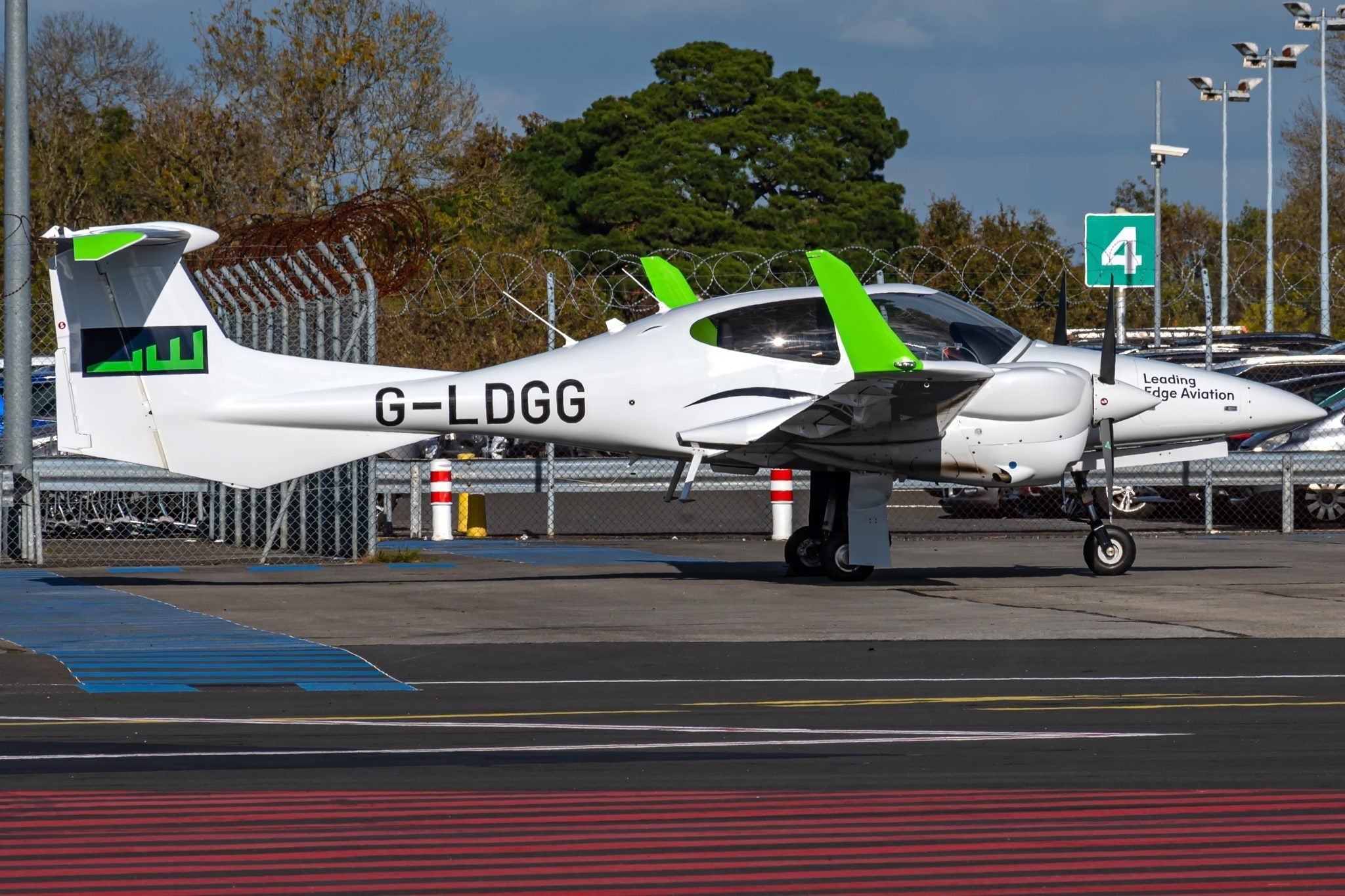
UK-based flight training academy Leading Edge Aviation has secured a significant new agreement with the UK Ministry of Defence (MoD) to help deliver additional military pilot training capacity for the Royal Air Force and wider UK armed forces.
The announcement marks another important step in addressing the growing demand for highly trained military pilots, while also highlighting the increasing role that civilian aviation training organisations are playing in supporting military aviation requirements.
Under the initial two-year contract, Leading Edge Aviation will support the training of up to 34 pilots, with the possibility of extending the programme further in the future. The training will focus on both experienced military aircrew and new entrants transitioning into multi-engine and multi-crew operations.
Training will be conducted using the academy’s fleet of Diamond DA40 and DA42 aircraft, alongside advanced simulators and the company’s Airline Pilot Standards Multi-Crew Cooperation (APS MCC) course. The programme is designed around Competency-Based Training and Assessment (CBTA), an increasingly important methodology in modern aviation training that places greater emphasis on real-world decision-making, leadership, situational awareness, and crew resource management.
For the UK military, the partnership represents an opportunity to supplement existing military training pipelines with specialist civilian expertise at a time when pilot demand remains high across both military and commercial aviation sectors. Pilot shortages, increasing operational requirements, and the growing complexity of modern aircraft have placed additional pressure on training systems worldwide.
According to Dave Alexander, a former RAF pilot and Chief Operations Officer at Leading Edge Aviation, the company is “immensely proud” to support RAF flying training and contribute to the development of pilots who will operate in some of the world’s most demanding environments.
The agreement also reflects the wider evolution of pilot training. Modern military operations increasingly require pilots to possess not only technical flying ability, but also strong non-technical competencies such as leadership, communication, workload management, and crew coordination. These are areas where competency-based training has become especially valuable.
Leading Edge Aviation already has experience supporting RAF operations through training provided for pilots assigned to the Envoy VIP transport aircraft fleet. This latest contract further strengthens the academy’s position as a growing force in both civilian and military aviation training.
The partnership also highlights how closely aligned modern military and airline pilot training have become. Multi-crew cooperation, simulator-based learning, evidence-based training, and advanced threat and error management techniques are now fundamental across both sectors.
As global demand for pilots continues to rise, partnerships like this between military organisations and civilian training providers are likely to become increasingly common. For Leading Edge Aviation, the agreement represents a major endorsement of its training philosophy and capabilities. For the UK military, it provides additional flexibility and capacity to help prepare the next generation of military aviators for the challenges of modern air operations.
Share: